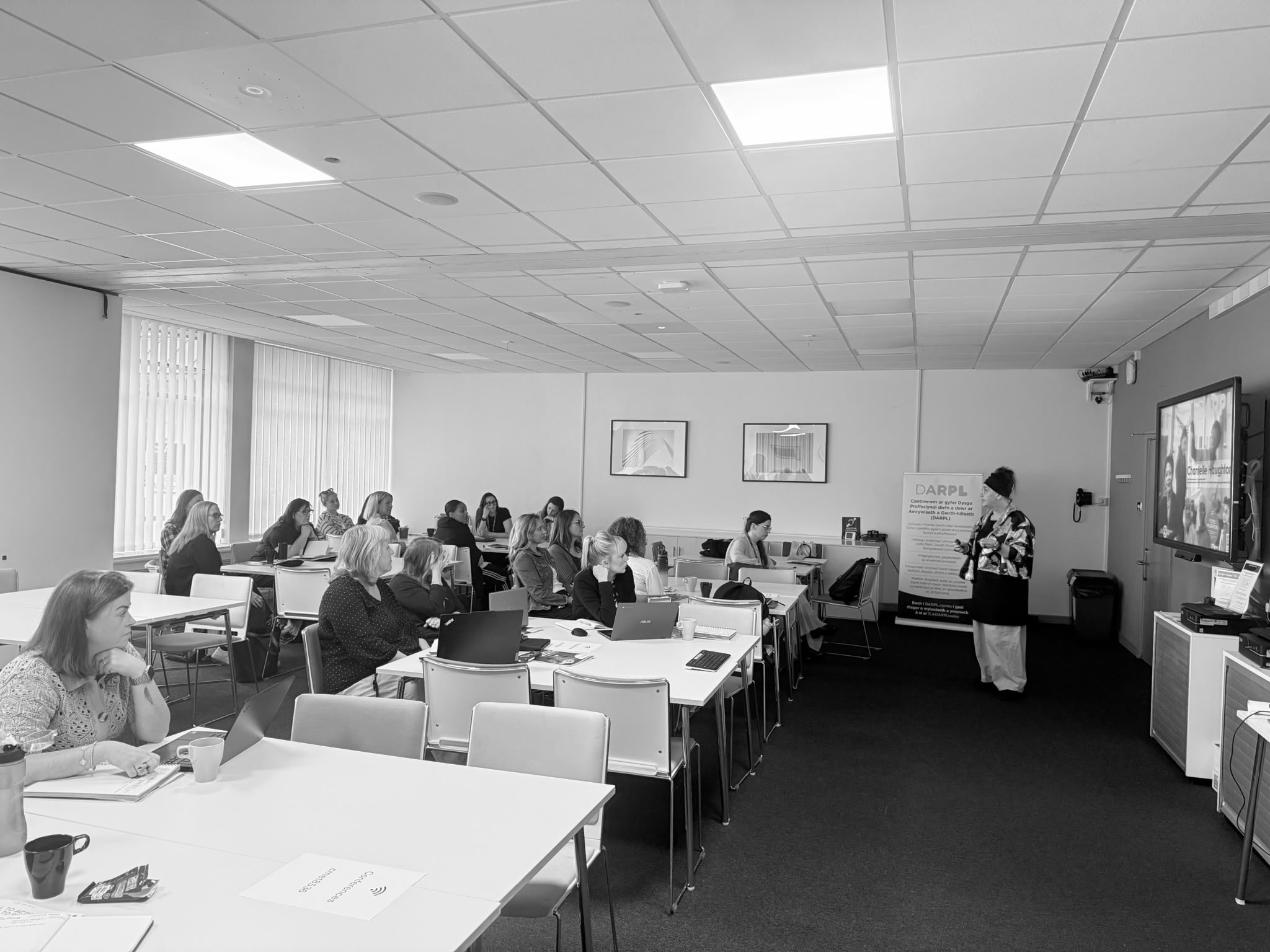
My anti-racist journey started in May 2022, when I attended the DARPL conference in Cardiff. Now this might sound a bit dramatic, but that day changed my life!
It opened my eyes to the idea of systemic racism, privilege, and bias, and helped me to recognise how these issues impact society and my own life.
It was also the beginning of connections and alliances I didn’t know would come to be such an important part of my personal and professional development. These individuals have inspired me and supported my growth over the last two years, leading to collaborations and advocacy work that is making a real difference to the communities in which I serve as an educational leader.
I may not have been as aware before, but in a world where racism continues to shape institutions, policies and everyday interactions, reading has been and continues to be the most powerful step I have taken towards awareness and action.
Some of the books have challenged my perspectives, uncovered my own hidden biases, and provided a historical context that has deepened my understanding of systemic injustices.
Whether you are just beginning your journey or looking to expand your knowledge, engaging with the world of scholars, activists, and those with lived experiences can be transformative. It has for me!
However, reading is just the first step- true change comes from applying what you learn to conversations, choices and advocacy.
So, here it is! My book list in the order that I would read (if I could do it all again), with a few footnotes to help you make your book choices work for you!
1. ‘I Heard What You Said- A black teacher, A white system’ by Jeffery Boakye
Probably my most relatable read as a teacher. Jeffery is funny, to the point, and it hits home fast that his experience of teaching is very different to mine as a white female. A really good book to start on if you’ve not read much about racism or anti-racism yet. Jeffery has also published children’s literature that is really worth getting on your reading list for years 5 and 6, if you are aiming to diversify your literacy curriculum.
2. ‘Black and British’ by David Olusoga
Wow!! Talk about not knowing what you don’t know! This book enthralled me and totally undid the Eurocentricity of what I thought I knew about British history. This book really helped me to understand what is meant by colonising the curriculum and how my own education was filtered through an entirely white lens. If nothing else, it’s one of the most interesting books I’ve read in a long time. There is also a child-friendly version of the book, which is fantastic for use in school.
3. ‘Maybe I don’t Belong Here’ by David Harewood
A hard but necessary read. Being married to a man of Caribbean heritage, I was able to recognise many of the experiences David writes about in this book in my own husband, and initially I was ashamed that I hadn’t appreciated the toll it must have taken on him growing up in the very un-diverse Vale of Glamorgan. There is also a documentary about David’s struggle with psychosis, which I highly recommend watching once you’ve read and understood David’s story.
4. ‘Why I no Longer Talking to White People About Race’ by Reni Eddo-Lodge
Be prepared to really question yourself deeply for this one. Reni does not hold back and there is the risk you will be uncomfortable if you don’t take the time and really listen to what she says. This book needs re-reading and reflection on each chapter. Reni’s words are sharp, intelligent and necessary. I would recommend reading this with a friend. A mini book club if you will. So that after each chapter you can discuss it, as you will need time to digest and really focus in on your own behaviour.
5. ‘Take Away’ by Angela Hui
This one, with its gorgeous recipes at the end of each chapter, will make you hungry, but despite the constant want for delicious Chinese food, it will also give you an insight into the life of a global majority child growing up in a white world. In fact, it’s probably one of the closest experiences that I have read to some of the lived experiences of children within my school. Angela was brought up in the Welsh valleys, with chapters referring to her travels to Cardiff Global Foods, making her lived experience of racial injustice very pertinent. Having a family-run Caribbean food business, it made me smile to think that my own children have sat on trolleys up and down the aisles just as Angela did as a little girl.
6. ‘The Good Ally’ by Nova Reid
Time to be courageous! By now, you should be, as Nova puts it, ‘Comfortable with being uncomfortable.’ This book has a sense of urgency and calls to arms those who want to make a difference and actually do something to actively fight against racial injustice. Don’t start with this book, but when you read it, it will help you to really recognise those subtle forms a racism in action that many will miss. This book was a healing process for me. It helped me to take my guilt, sadness and feelings of responsibility (who’s that really going to help?) and channel it into positive action, discussions and advocacy.
7. ‘Nice Racism’ and ‘White Fragility’ by Robin DiAngelo
I wasn’t sure about picking these books up. I was conscious that the author was a white woman, but I am so glad I did. Robin addresses white people about racism from a white person’s perspective. Interestingly, her writing highlights how well-meaning good white people can unintentionally act in a harmful way. She writes about her own mishaps and struggles, in order to highlight that it takes meaningful thought and reflection to align your ‘actual’ actions with your ‘well-meaning’ values: something I’ve struggled with throughout my life.
8. ‘The Windrush Betrayal’ by Amelia Gentleman
I thought I knew about the devastating impact that government policy had on the Windrush Generation; however, like everything else in our majority white society, it has been heavily downplayed in the media and dare I say it, after reading this book, ‘brushed under the carpet.’ This book had me gasping out loud and in tears at times. Without reading this, I would have never known the true scale and ongoing impact of the policy named ‘the hostile environment’. Be prepared for strong emotions and outrage when reading this. It might be a good idea to have a buddy read it with you so you can be outraged together!
9. ‘The Mixed-Race Experience’ by Natalie Evans and Naomi Evans
This book explores what it is like to be of mixed heritage in today’s society. As a mum to four children with mixed white and Caribbean heritage, I found this book really interesting as it includes lots of interviews and points of view from many people with mixed backgrounds from across the country. This is a great book to expand your knowledge and understanding of lived experience, with practical advice for mixed heritage families and friendships.
10. ‘Brit(ish)’ by Afua Hirsch
I loved this book. Afua has such a beautiful writing style, and discusses the difference between her and her husband’s contrasting experiences growing up in Britain. She describes her longing and journey to find her identity while also having many privileges, while in contrast, her husband lacked the same privileges but had a life rich with culture and was firm in his identity as a black man. A really interesting slant on how every person of colour faces their own challenges. This book reveals the identity crisis at the heart of Britain today.’ Something that many white people wouldn’t notice day to day.
11. ‘Sugar and Slate’ by Charlotte Williams
A story of self-discovery from Charlotte, who was brought up by a white Welsh-speaking mother and a black father from Guyana. This memoir really brings home that Wales belongs to all those who live here, yet some live in a Wales where mixed messages lead to feelings of somehow ‘not being whole.’ Parts of this book made me question some of the choices I have made as a mother of mixed heritage girls and also helped me to understand how finding and knowing your identity is much harder when you face daily barriers just because of the way you look. It made me look at my daughters in a completely different way.
12.‘Slay in Your Lane: Loud Black Girls’ by 20 black female writers
The perfect book to give black women a voice and a platform. From this book, I learned that despite black women reading more than any other ethnic group in the UK, they are still largely invisible as published authors. This is an important read, an anthology that delves into what’s next in our post-Brexit world with Donald Trump and the rise of the far right on the horizon. Great for listening to on Audible as the essays are short, concise and thought-provoking. Perfect for my 30-minute commute to and from school.
13. ‘The Misadventures of Awkward Black Girl’ by Issa Rae
I absolutely loved reading this book. Issa reminded me of my middle daughter Mika. Introverted, awkward, witty and a person of colour, the stories are about her navigating a world made for everything she is not. It may make you laugh out loud and cringe at times, but it will also help you to appreciate the unique experiences girls who don’t meet the criteria our society portrays as ‘cool’ may have.
14. ‘What White People can do Next’ by Emma Dibiri
This is not, as you might expect, a list of things you can do. In fact, it’s far more than that. You need to have done the work before you get to this book, or you quite simply won’t understand what Emma is trying to convey. Meaningful change can’t be done as a tickbox exercise. If you’ve done all the reading above, then you will know that. What Emma does, is makes you, takes you, thinking and push it even further, adds a dab of historical context and a challenge or two and there you have it- another slant, viewpoint and very important series of tasks to help you progress in your work towards actually being an anti-racist and an advocate.
15. ‘Don’t touch my Hair’ by Emma Dibiri
Who knew that hair could represent so much oppression and appropriation? This book literally tells the history of Black hair. How hair has been used as a weapon, as a tool for oppression and as an expression of freedom. Having 3 girls with very different hair textures and patterns, I learned very quickly that I had some learning to do, and I was very lucky to have family on my husband’s side who were happy to help me, but even I missed some very important and startling evidence of racism.
Books I am going to read next:
‘Progressive Dystopia’ by Savannah Shange – recommended by Kwame on the ELS
‘Legacy of Violence’ by Caroline Elkins
‘Sapiens- A brief History of Humankind’ by Yuval Noah Harari
‘Deconolising my Body’ by Afua Hirsch
‘An Immigrants Love Letter to the West’ by Konstantini Kisin
‘One of Them’ by Musa Okwonga
Just some of the books we have on our reading list in school for the pupils: (my faves by black or brown authors and with black and brown characters). This is not an exhaustive list, but these are the books the children have loved the most.
Year 5/6-
‘When Life Gives You Mangoes’ by Kereen Getten
‘Windrush Child’ by Benjamin Zephaniah
‘Fairy Tales Gone Bad- Zombierella’ by Joseph Coelho
‘Onyeka and the Academy of the Sun’ by Tola Okogwu
‘The Crossover- poetry anthology’ by Kwame Alexander
‘The Lightning Catcher’ by Clare Weze
‘When Stars are Scattered’ graphic novel by Victoria Jamieson and Omar Mohamed
‘Kofi and the Rap Battle Summer’ by Jeffrey Boakye
Year 3/4
‘Major and Mynah’ by Karen Owen
‘Planet Omar’ by Zanib Mian
‘Akissi tales of Mischief’ graphic Novel by Abouet and Sapin
‘Marv and the pool of peril’ by Alex Falase-Koya
‘Coach Gran’ by Tom Jamieson
Non-Fiction we love in school:
‘Back and British’ (children’s version) by David Olusoga
‘20 Colorful People of Wales’ by Natalie Jones
‘Little Leaders: Exceptional Men in Black History’ by Vashti Harrison
‘Little Leaders: Exceptional Women in Back History’ by Vashti Harrison
‘Goddess: 50 Goddesses, Spirits, Saints and other female figures who have shaped belief’ by Janina Ramirez
Picture books we love:
‘Boundless Sky’ by Amanda Addison and Mauela Adreani
‘The Quilt’ by Valeriane Leblond
‘A Rose Named Peace’ by Barbara Carroll Roberts (world war theme)
‘Kunkush: the true story of a refugee cat’ by Mame Ventura
‘Here I Am’ by Patti Kim
Dual language books we love in school:
‘Errol’s Garden’ by Gillian Hibbs (Mandarin and English)
‘Samira’s Eid’ by Nasreen Aktar and Enebor Attard (Arabic and English)
‘The Biscuit Moon’ by Jesus Zanton (Arabic and English)
‘The Giant Turnip’ adapted by Henriette Barkow (Cantonese and English)
‘Lima’s Red Hot Chilli’ by David Mills and Derek Brazell (Arabic and English)
‘Happy After All’ by Anneke Forzani and Alex Jarman (Arabic and English)
‘Mirror’ by Jeanie Baker (Arabic and English)
‘Grandma’s Saturday Soup’ by Sally Fraser and Derek Brazell (Cantonese and English)
I hope you find these booklists useful. We are currently working on a collection for our early years and years 1 and 2, as well as collecting more whole-school picture books that will feed into our inquiry planning and projects.
The children are also involved in a creative arts project where they have collated stories from all over the world that represent them and their family’s heritage, and recorded them using Garage Band for everyone to listen to and learn. We will be launching our living library on our website in the summer: an ever-changing and living library of stories that represent our school and our community.
Visit DARPL’s library to explore Enhanced Leadership Series blogs and case studies alongside other articles and guidance resources.
If you would like to further your own anti-racist professional learning, explore DARPL’s Virtual Campus bitesize courses and visit DARPL’s Events Calendar.