Growing up, I wasn’t much of a reader. To be honest, if it didn’t involve a ball, a bat, or a bike, I wasn’t all that interested. I grew up in a small community on the Llŷn Peninsula, where very little thought was given to racism. We complained about the tourists who arrived every summer, blocking the roads with their fancy rental cars, filling the beaches with speedboats and jet skis, and even changing the language we heard on the streets, but liking or disliking someone because of the colour of their skin or their religion simply didn’t cross our minds.
My grandmother used to tell us about the first Black man she ever saw walking in the village, and as it happens, her sister went on to marry him. To me, growing up, that just meant I had a great-uncle from the tiny island of Saint Helena who had settled in Wales after the war. How he came to live in a small fishing village in North Wales, or what he left behind, was never really discussed, nor was his skin colour. His children, my second cousins, were simply accepted for who they were.
Skin colour, in a way, was an interesting topic on the Llŷn Peninsula. Some families had darker complexions than others, was that due to recent migration, or ancient DNA? As children, we didn’t question it. We accepted it, and that was that. As long as I had a bat, a ball, and my bike, I got on with my life.
Things began to shift one summer when I was in sixth form college. I was working in a shop, and one day my boss told me I needed to improve my English because customers struggled to understand me. Fair enough, I had a strong Welsh accent, quite a restricted vocabulary, and I’d managed to fail my English GCSE… twice.
So I decided I needed to read more to improve my vocabulary. I tried a number of books, but I really struggled. English is my second language, and it took real effort to get through a book. After several attempts, I leaned into what I knew. As a sports fanatic, I bought a book about boxing, and for the first time in my life, I read a book cover to cover, and actually enjoyed it. That sparked something. Mike Tyson led me to Muhammad Ali, then to Joe Louis and Jack Johnson. From there, I found myself drawn into the wider history of sport, and through that, into the story of racism in the United States. I began to see it through the lives of sporting figures like Jesse Owens, Jackie Robinson, and Wilma Rudolph. That, in turn, led me to the wider cultural and political context of the civil rights movement and figures such as Martin Luther King Jr. and Malcolm X.
As a child of the 80s and 90s, I’d grown up on Hollywood films. It was a time when American culture was being exported across the world, with television playing a huge role. It didn’t take long to realise that the stories on screen weren’t an accurate reflection of reality. One evening at university, I was watching Good Will Hunting. In one scene, the main character, Will, talks about the importance of reading the “right (expletive) books” and mentions A People’s History of the United States by Howard Zinn. The next day, I checked it out of the university library. That book changed something in me. It challenged not only my understanding of American history, but also how I approached history more broadly. It pushed me to think critically, to question what I thought I knew, and to look at history from different perspectives. It encouraged me to consider the stories of those who were already there, not just the narratives created by those who arrived, took land, and conquered, shaping stories to justify their actions. It also opened the door to a deeper understanding of the transatlantic enslavement trade and the economic development of the United States, how it was built, in part, on plantations and the trade in human lives.
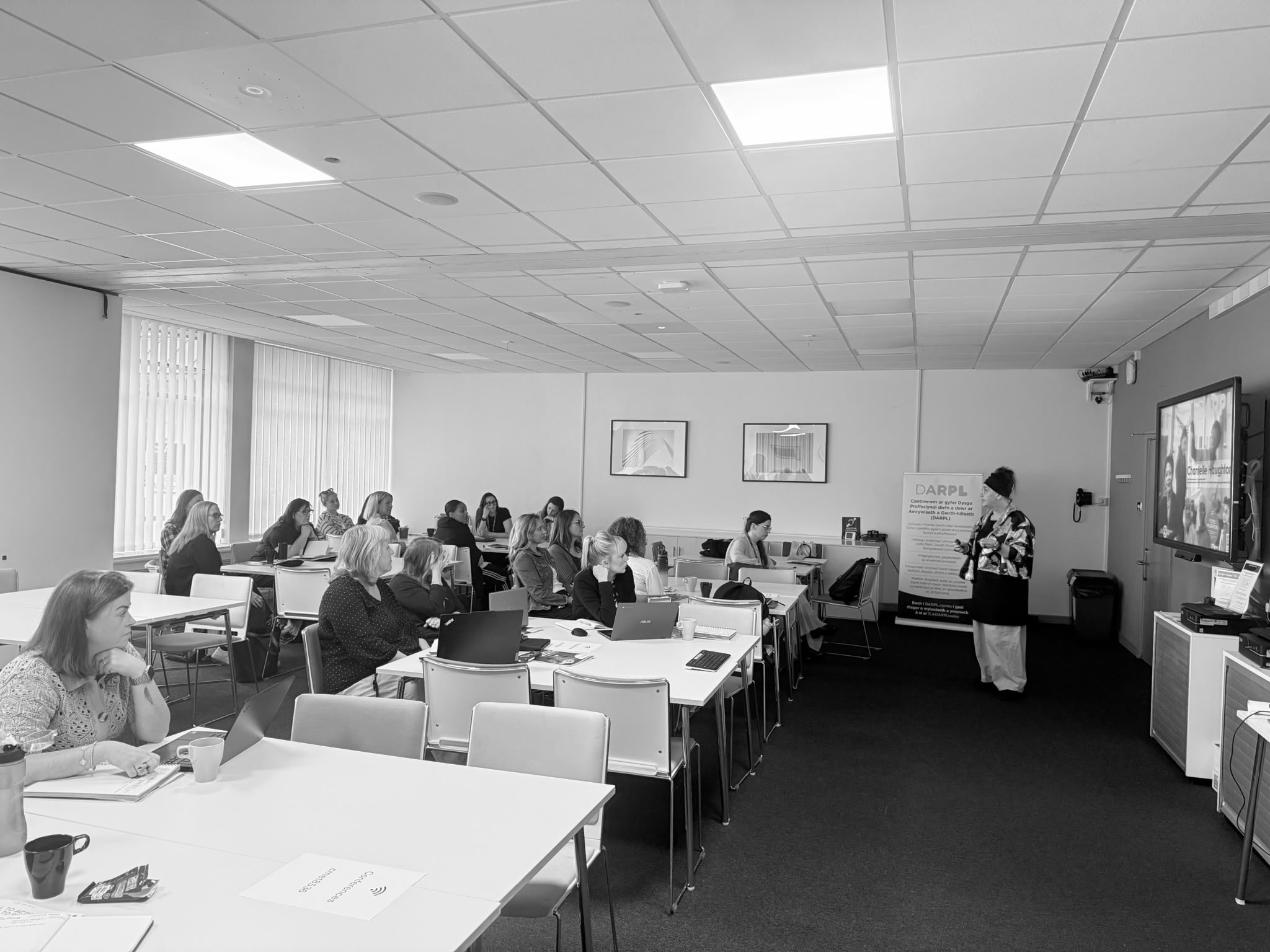
Over the years, many books and films have deepened my understanding of how devastating this history is, not just in the United States, but across the world, including the impact of the British Empire on indigenous populations. Yet, until I attended the DARPL Enhanced Leadership, I had paid very little attention to my own corner of North Wales, how even this tiny corner of the world has been shaped by trade, conquest, migration, and both direct and indirect links to the slave trade.
Another spark of curiosity from the DARPL ELS programme has been around how we frame indigenous history, often only through the lens of interactions with white societies. For example, how much do I really know about the history of India, Nigeria, or Australia before colonisation? Who are the cultural figures of North West Africa who have shaped language, art, and identity? What stories have we overlooked by focusing so heavily on European royal families, empires, and figures like Shakespeare or Henry VIII? The truth is, I know very little about these cultures, and I know very little about the history of my own country. My formal education was largely centred on English history, leaving many other narratives unexplored. Even my informal education through film and television has largely shown me the history of the United States from the perspective of the conquerors. Why is that? What is it about the history of indigenous people around the world that our attention is so often guided away from?
In school, the story of Wales was often framed around how Welsh natural resources roofed the world and powered the Industrial Revolution. What was left out was the intertwined story of finance, and how closely the prosperity of the nation was connected to the slave trade. There’s a fascinating book, Llechi Cymru by David Gwyn, about the slate industry in North Wales. It includes a photograph of workers going to meet Lord Penrhyn to ask for better pay before the great Penrhyn Strike. One of my great-grandfathers is in that image, and was part of the group pushing for the strike. I grew up with the narrative of English conquest in North Wales, and how aristocratic families built their fortunes on the back of Welsh labour. What I didn’t understand at the time was that the money used to invest in those quarries had often already been made through conquest, and through the trade of African men and women.
So why am I focusing so much on knowledge and understanding in my reflection? Because I believe our beliefs and values are shaped by the stories we are told, and the stories we tell ourselves. To truly understand our own perspectives, behaviours, and attitudes, we need to reflect on those stories and question whose voices they represent.
At the end of the DARPL ELS, if I’m completely honest with myself, do I truly understand what racism feels like? No. Do I understand the lived experience of someone from a global majority background living in Wales? No. Do I understand the everyday challenges of someone from a global majority background in a large English city? No. Do I fully grasp what white privilege means, or how it has shaped my own life? Again, not really. But what I do have now is a willingness to admit that I don’t know, and a genuine curiosity to learn more and it has driven me to consider this in my leadership in education. I want to show, through my actions, that it’s okay to question your own understanding of history and of the world, and to challenge the stories that have shaped your beliefs, values, and attitudes.
Am I anti-racist? I believe I am. But am I fully equipped with the tools and understanding to create meaningful change in my community and through my work? Let’s say I’m a work in progress, the work we’re doing is a work in progress. There’s a lot of history to unpick and we’ll continue DARPLing. What I do know is that I’m committed to this journey for the long term, to keep learning, to keep questioning, and to keep challenging both my own understanding and, where I can, the understanding of others.
What are you planning to do next in DARPL?
To find out more about joining DAN (follow this link): Advocacy Network – DARPL
To find out more about attending ELS (follow this link): Enhanced Leadership Series – DARPL