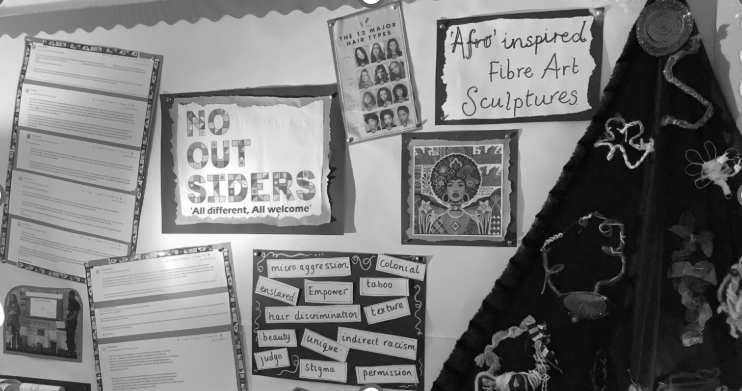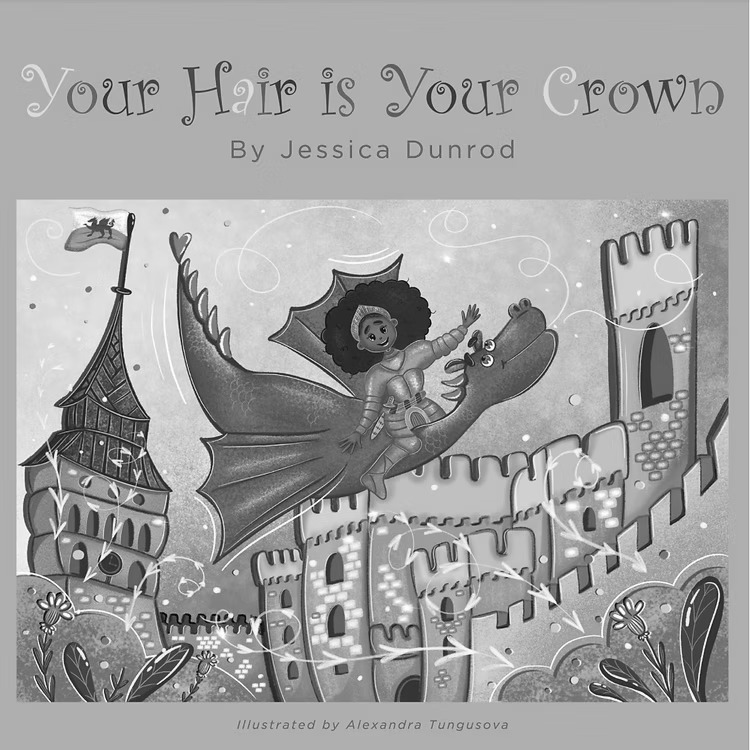
At the start of our Spring Term at Usk CiW Primary School, the overarching project for the whole school was “No Outsiders,” a theme that has guided our exploration of diversity, inclusion and anti-racism. The stimulus for the work Years 3 and 4 undertook was the book “Your Hair Is Your Crown” by Jessica Dunrod. It served as a powerful hook, helping us understand what it might feel like to be perceived to be different or to feel like an ‘outsider’ because of appearance, especially hair.
Understanding Hair Discrimination
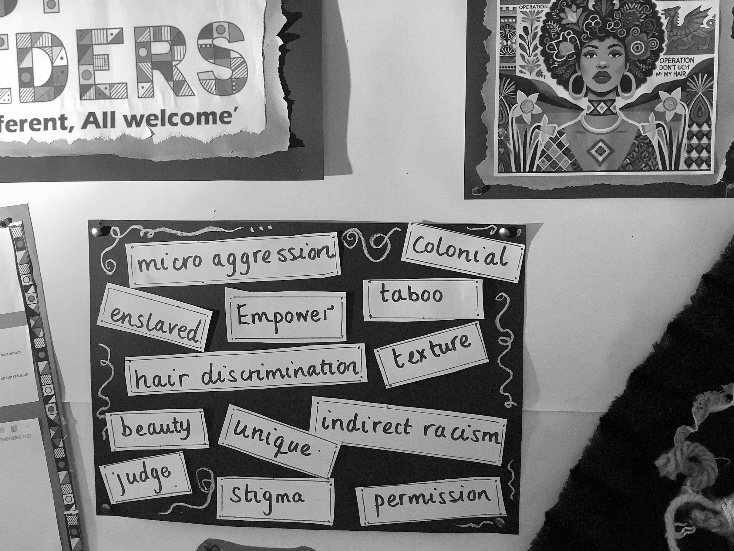
Through a narrow focus on ‘Afro textured hair’ and through our reading and discussions, we learned about the ‘Halo Code’ and the importance of respecting personal boundaries. The children were particularly struck by the concept of hair discrimination. Building an understanding of correct terminology was a crucial part of engaging in meaningful discussion. Children learned that to touch someone’s afro textured hair crosses personal space boundaries and how more negative views on afro textured hair date back to colonial times. We learned from the book and further exploration that it takes a lot of time, skill, and talent to style afro-textured hair. These reflections highlighted the deep impact that hair discrimination may have on individuals’ day to day lives and upon and the importance of respecting individuality.
Engaging with the Community
To deepen our understanding, we invited Newport-based charity Cynefin Pamoja to visit our school. Cynefin means “belonging” in Welsh and “Pamoja” means “together” in Swahili. The organisations agenda fitted perfectly with our ‘No Outsiders’ Project and they attended school the week before they ran the first Afro textured Hair show in Wales! Perfect! Parents also offered to share their personal hair journeys, and this brought the book ‘Your Hair Is Your Crown ‘to life for the learners, providing invaluable insights into the cultural significance and personal experiences associated with afro-textured hair. For the first time in their school life, one child proudly let free their Afro textured hair in their classroom, demonstrating pride in their appearance and heritage and also surety in the knowledge that their classmates supported, understood and accepted their difference. It was quite a moment!
We went on to explore the timeline of hairstyles, learning about the natural hair revolution of the 1960s, which encouraged people to embrace their natural hair and be proud of their identity and African heritage. This historical context helped the children appreciate the ongoing struggle for acceptance and the need to understand and celebrate natural beauty.
Reflections from DARPL Authors
As staff, our professional learning was enriched by the blogs and videos from DARPL authors, particularly Jessica Dunrod, the author of the book that provided such a rich hook for creating an authentic, exciting and age-appropriate anti racist lens for learning. The authors own reflections during the live session and the questions they posed, challenged us to think critically about our own practices and biases. The authors’ videos were particularly insightful, offering practical strategies and personal anecdotes that resonated with both staff and helped us to build a learning offer that addressed all that was important.
Perhaps our greatest golden nugget from the wonderful experience facilitated so well by Team DARPL is that both staff and learners are less afraid to explore anti racist themes and the distinction between being non-racist and anti-racist has become increasingly understood. During a whole school DARPL themed assembly, one 8 year old confidently shared their understanding “We have learned that anti-racism means actively (and safely) standing up against racism, while being non-racist means not being racist, but also not doing anything about it”. This understanding empowers us to take a more proactive stance in our daily interactions and in curriculum development. It is the secure springboard from which we can launch many exciting learning opportunities.
Curriculum Development and Learning Offers
Incorporating the colourful and engaging book “Your Hair Is Your Crown” into our curriculum offer this term has allowed us to engage in various creative experiences and to develop persuasive writing skills for an authentic purpose. The children wrote and sent persuasive emails to Cynefin Pamoja and Jessica Dunrod, advocating for the message “Your hair is your crown” and encouraging pride in one’s identity. They also wrote about “OPERATION: Don’t Touch My Hair,” using facts (from past and present) to persuade others that it is never okay to invade someone’s personal space.
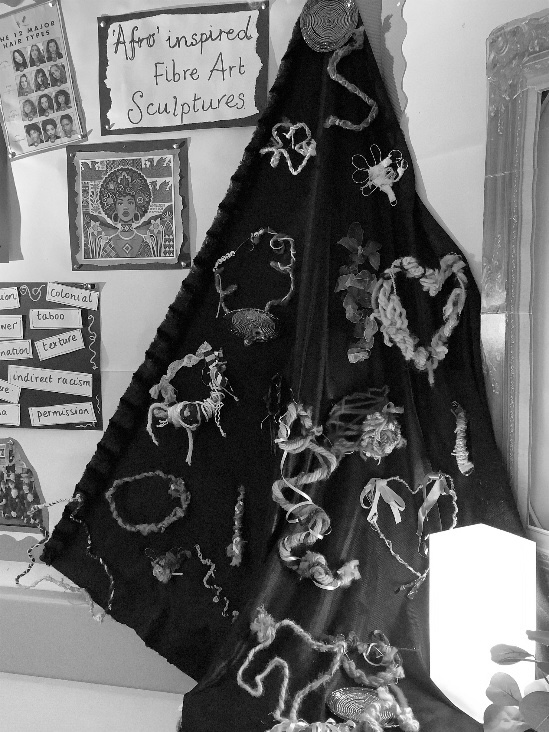
This has become a wonderful interdisciplinary project, where through aspects of Expressive Arts we were able to further embed learning. The children created fibre art wire sculptures using skills such as wrapping, threading, weaving, and plaiting, inspired by the art of styling afro textured hair that we learned about from Cynefin Pamoja. Learning experiences such as these are enabling children to not only develop their artistic abilities and integral skills but also deepen their appreciation for the cultural significance of afro-textured hair. Their finished products now adorn classrooms and corridors.
Conclusion
Our “No Outsiders” project with “Your Hair Is Your Crown” as the focus has been transformative for both learners and staff. As well as the great enjoyment it brought, we have gained a deeper understanding of diversity, inclusion, and anti-racism and we are committed to continuing this important work. By embracing these values, we hope to create a school environment where every child feels safe, valued and respected, regardless of their appearance and heritage. At Usk CiW Primary School, we want to send the message know there are ‘No outsiders’ here.
To look at the DARPL set about Jessica’s book (blog, video and reflective questions), here’s the link: DARPL Author Series 2025 – Jessica Dunrod – DARPL